Smart Circuits with Python
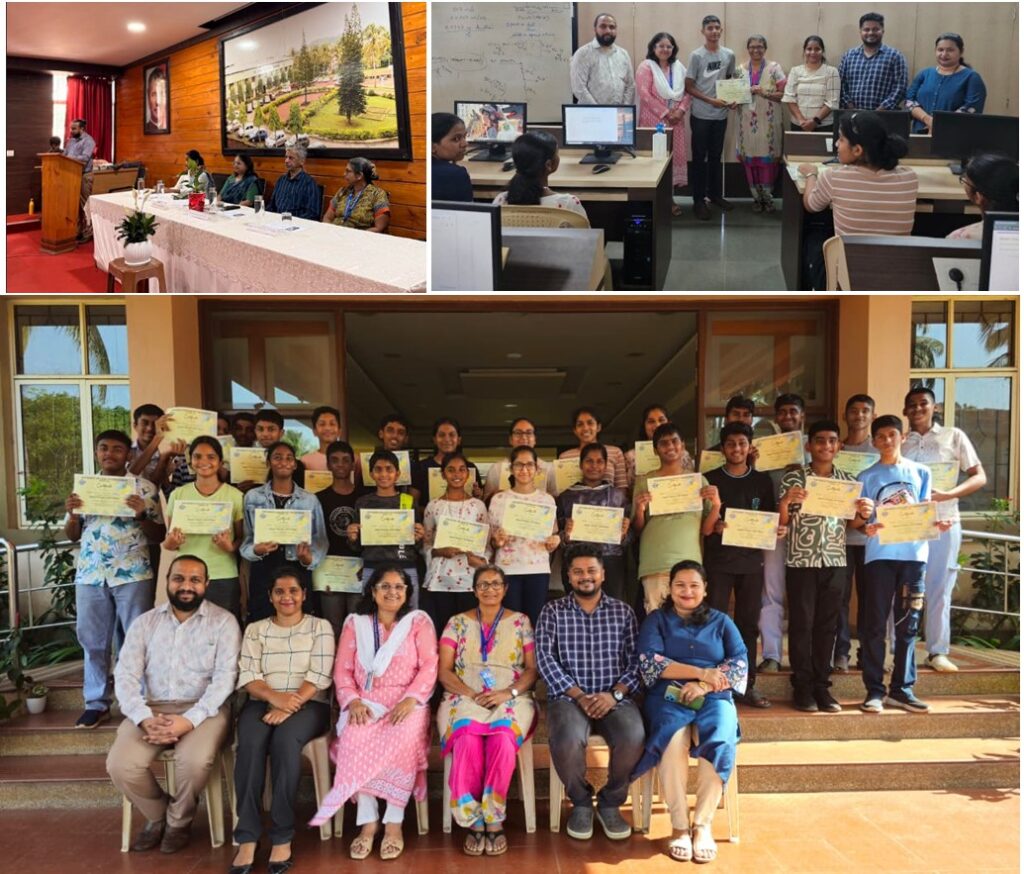
The Department of Electronics and Computer Science at Don Bosco College of Engineering (DBCE), Fatorda, successfully organized a week-long Summer School titled “Smart Circuits with Python”, funded by the Goa State Research Foundation (GSRF), from April 6 to 10, 2026. The program aimed to introduce students to the integration of Python programming with electronic circuit design, enabling them to design, control, and automate hardware systems. This initiative helped participants develop skills to make electronic systems more intelligent, efficient, and interactive.
The inaugural ceremony featured Professor Savio Faleiro as the Chief Guest, who commended the department’s efforts in promoting data literacy among school students. He encouraged the participants to actively engage in coding exercises and emphasized the importance of developing strong analytical and problem-solving skills, which are essential in today’s technology-driven world.
The Summer School Program witnessed enthusiastic participation from students representing several schools across Goa, namely Bhatikar Model High School (Gogol), Fatima Convent High School (Margao), Loyola High School (Margao), Mahila Nutan English High School (Margao), Our Lady of Rosary High School (Fatorda), Our Lady of Snow High School (Raia), Perpetual Succour Convent High School (Navelim), Shishu Vikas High School (Shantinagar), and St. Joseph High School (Aquem).
The sessions were conducted by faculty members from the Department of Electronics and Computer Science, including Ms. Mathilda Colaco, Mr. Deron Rodrigues, Dr. Mohini Naik, and Mr. Yeshudas Muttu. They delivered engaging and interactive sessions that effectively combined conceptual learning with practical implementation. Implementation. The workshop was coordinated by Ms. Mathilda Colaco and Mr. Deron Rodrigues.
The Smart Circuits with Python Summer School was carefully structured over five days to provide a progressive blend of theoretical understanding and hands-on experience in electronics and programming.
Day 1 (April 6, 2026 – Monday):
The program commenced with the inaugural ceremony, setting the tone for the week. This was followed by introductory sessions on electronic circuits and Python programming, helping students build a foundational understanding of hardware and software concepts. In the afternoon, participants engaged in hands-on sessions involving breadboard usage and basic circuit building, culminating in simple circuit demonstrations.
Day 2 (April 7, 2026 – Tuesday):
The second day focused on strengthening Python programming skills. Students explored variables, data types, input handling, operators, decision-making, loops, and functions through interactive hands-on sessions. Later, they were introduced to MicroPython and basic microcontroller setup, bridging the gap between programming and hardware interaction.
Day 3 (April 8, 2026 – Wednesday):
Participants were introduced to the ESP32 microcontroller, gaining insights into its features and applications. This was followed by practical sessions where students programmed the ESP32 using MicroPython to control LEDs and build their first smart circuits, reinforcing embedded system concepts.
Day 4 (April 9, 2026 – Thursday):
The fourth day emphasized interfacing techniques. Students learned about sensors and actuators, followed by hands-on sessions involving interfacing various sensors such as IR, temperature and humidity, and soil moisture sensors. They were also introduced to actuators like motors and buzzers, understanding real-world automation applications.
Day 5: (April 10, 2026 – Friday):
The final day introduced students to the basics of the Internet of Things (IoT). The program concluded with sensor integration, where participants learned to read and process real-time data, enabling the development of smart and interactive systems. The valedictory function marked the culmination of the Summer School, during which students received their certificates and shared positive feedback about the workshop.
Overall, the program successfully provided young learners with foundational exposure to smart circuits, Python programming, and hands-on electronics. It concluded on an inspiring note, motivating students to further explore the fields of embedded systems, automation, and intelligent hardware design.


 Visit Today : 1050