Research Review Poster Making Training
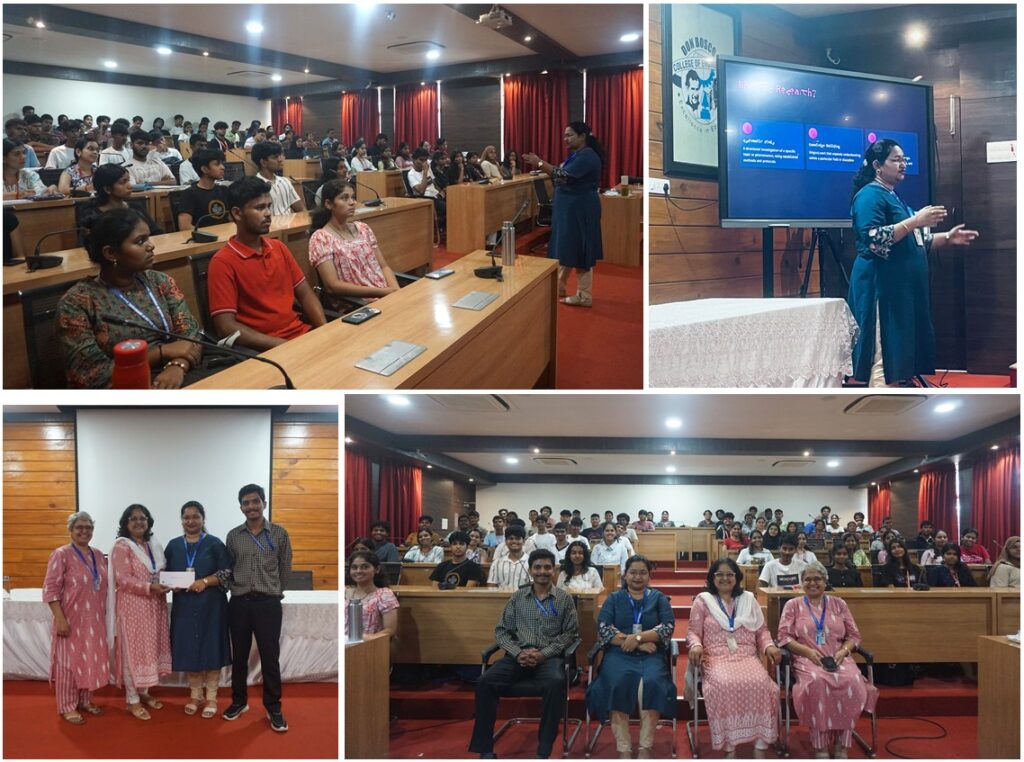
The Department of Science and Humanities of Don Bosco College of Engineering, Fatorda–Goa, in collaboration with the Research & Development Cell and the Climate Action Unit Committee, successfully organized a Research Review Poster Making Training session on Friday, 10 April 2026, from 4:00 pm to 5:00 pm at Seminar Hall 2.
The session was conducted by Dr. Mohini Naik, Assistant Professor in Electronics & Computer Science at Don Bosco College of Engineering. The session witnessed enthusiastic participation from First- and Second-Year undergraduate students of Don Bosco College of Engineering.
The primary objective of the training was to equip students with the necessary skills to prepare effective research review posters for the upcoming “Sustainable Earth: Research Review Poster Competition.” The session focused on helping students understand how to critically analyse existing literature, identify research gap, and present their findings in a clear and visually engaging format.
Dr. Naik began the session by explaining the concept of a literature review and its importance in academic research. She emphasized the difference between merely summarizing research and critically analysing and synthesizing information from multiple sources. She guided students on how to identify credible sources such as peer-reviewed journals and how to structure their review effectively.
The resource person provided detailed insights into the essential components of a research review poster, including title, introduction, literature analysis, research gaps, and conclusion. She also highlighted the importance of visual elements such as charts, diagrams, and infographics in enhancing the clarity and impact of the poster.
Practical tips on poster design, layout, font usage, and colour schemes were shared to help students create visually appealing and professional posters. Dr. Naik also discussed common mistakes to avoid, such as overcrowding the poster with text and lack of proper referencing.
The session was interactive, with students actively engaging through questions and discussions. The participants gained valuable knowledge on organizing content, improving academic writing, and effectively communicating research insights.


 Visit Today : 985